How Firehouse Subs Prepares, Steams & Serves Its Food
Have you ever grabbed a sub from Firehouse and noticed it tastes different than the usual cold cuts slapped on bread? There’s a reason for that, and it’s not some secret sauce or fancy ingredient list. It comes down to how they handle the meat and cheese before it ever meets the roll—a process they’ve been running since 1994 without changing a thing. The Firehouse Subs menu gives you plenty to choose from, but what makes every single option work is that steamer sitting behind the counter. This is exactly how Firehouse Subs prepares, steams, and serves its food, keeping people walking through the door year after year.
Walk into any Firehouse Subs, and you’ll notice they don’t have grills or toaster ovens back there—just steamers doing all the heavy lifting. This is how Firehouse Subs Prepares its signature hot subs. Once you place your order, they grab your hand-sliced meats, weigh them right there, and give them a quick steam before they ever touch the toasted roll. That burst of steam does two things at once: it warms the meat without drying it out, and it melts and stretches the cheese in about a minute. The whole process keeps the inside of your sub hot and savory while the bread stays pillowy soft, which is why these sandwiches hit differently than stuff that’s just been thrown in the oven. Honestly, once you know the secret, you start to notice how many other shops skip this step entirely.
Check also: Firehouse Subs Remains Popular
Have you ever watched them make your sub and noticed it’s not quite like the ones at other sandwich shops? This is exactly how Firehouse Subs Prepares each sandwich from start to finish. The whole thing kicks off when you order—they toss a roll into the toaster first thing, so it gets that golden outside while staying soft where it counts. While that’s happening, someone grabs your hand-sliced meats and cheese from the cooler and actually weighs it out right there, which sounds extra but keeps portions consistent across every sandwich.
Then comes the part that really sets them apart: the meat and cheese go into a steamer together for a couple of minutes, until the cheese melts and everything warms through without drying out. Once it hits that sweet spot, they pile it onto your toasted roll and pass it down the line for veggies, sauces, and whatever else you want. The whole process moves quickly—order to hand in maybe five minutes—but they’ve been building subs this same way since 1994, and it shows.
Check also: Firehouse Subs Diet
Most sub shops throw your meat and cheese under a heater or into an oven, but Firehouse does things differently. They figured out back in 1994 that steaming beats every other method for locking in moisture and getting the cheese to melt just right. The steam gently warms the hand-sliced meats without drying them out, unlike heat lamps or toaster ovens. That quick burst also opens up the flavors in a way that dry heat can’t, making every bite taste like the ingredients just came off the line. It’s such a simple tweak, but once you know the difference, you start to notice how many other places skip this step and end up with sad, dried-out sandwiches.
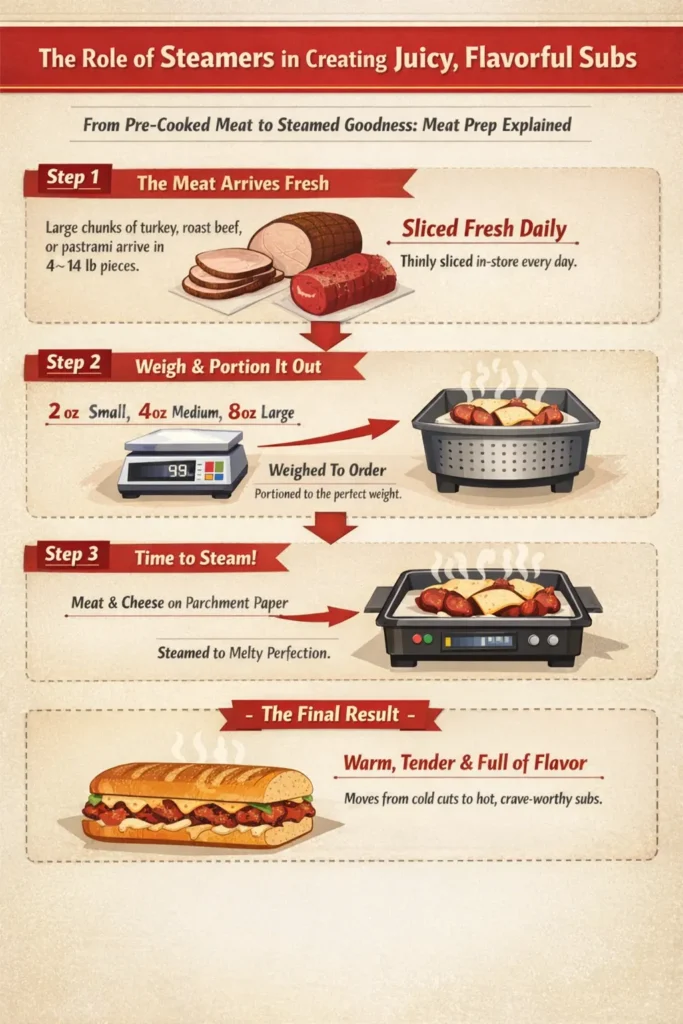
From Pre-Cooked Meat to Steamed Goodness: Meat Prep Explained
Have you ever wondered what happens to that meat before it ends up steaming on your sub? Most of it arrives at the store in big, uncut chunks—like 4 to 14 pounds of turkey, roast beef, or pastrami—and employees slice it fresh every single day until it’s thin enough to see through. The steak, meatballs, and some cured meats skip that step since they come pre-sliced and ready to roll. When you order, they grab the right amount based on your size—2 ounces for a small, 4 for a medium, 8 for a large—and weigh it to keep portions honest. Then they pile it onto parchment paper with cheese and steam it for a couple of minutes, which wakes up all those flavors and melts the cheese without making anything tough. By the time it lands on your toasted bread, that cold deli meat has transformed into something warm, tender, and actually worth craving.
Firehouse doesn’t bake its bread fresh in-store—it arrives pre-baked as 12-inch French loaves with those signature finger dents on top. This is part of how Firehouse Subs Prepares its sandwiches with consistency across every location. Once you order, they cut it to size, slice it open, and run it through a conveyor toaster until the cut side gets golden and crisp while the inside stays warm and tender. The trick is timing: they wait to toast until your meat and cheese are in the steamer, so the bread doesn’t sit around drying out. That quick toast gives you a sturdy shell that holds up to all those toppings without turning soggy. By the time it’s done, it’s warm, slightly crunchy, and ready to catch all that steamy meat and melted cheese.
Check also: Firehouse Subs vs Subway
Look, most sandwich shops throw stuff together and call it a day, but Firehouse treats the whole process like the details actually matter. The Firehouse Subs menu isn’t trying to reinvent the wheel—it’s built on hand-sliced meats, bread that hits the toaster at just the right time, and that steam step that keeps everything from drying out before it reaches your hands. Every location runs the same playbook they’ve been using since 1994, weighing portions and syncing up the toaster with the steamer so nothing sits around getting sad. That consistency from store to store is exactly how Firehouse Subs prepares, steams, and serves its food in a way that actually tastes like someone behind the counter gives a damn. It’s not complicated when you break it down—just taking the time to do simple things right—but you can taste the difference in every single bite.